Saturday, May 25, 2013

Book Review: MISMATCHED by Lydia Sharp

MismatchedMismatched by Lydia Sharp
My rating: 4 of 5 stars

This is a captivating and quick read. Lydia Sharp does a great job of developing character over world-building. The story left me wanting to know more about the culture and the world and the language. Here, Sharp uses brushstrokes to paint enough of the picture for the reader to fill in the rest of the canvas, which only adds to Liu, the main character.

Liu faces her matching ceremony at the onset of the story. The description of the harsh preparations was visceral and reminded me of the similar DIVERGENT ceremony. Sharp's MISMATCHED isn't about choosing a faction. Rather, it's about choosing a mate and how the heart stone of a clan member bonds with their mate and never lies. The core of the story is wrapped around this idea, and it was enough to draw me into the story and keep me reading until the very end.

Liu wrestles with her choice. She tries to listen to her heart stone that will guide her toward her perfect mate. She is open to the finding. But, her mate alludes her and she risks banishment following a year of being unmatched after the ceremony. Her brother and mother worry about her and the rest of the island begins muttering about her.

MISMATCHED is about being true to yourself and accepting the truth of one's heart over the expectations of the culture and society. I found this a powerful and beautiful read. I enjoyed how art played a role and left undertones of flowers and berries throughout the story. Highly recommended.


View all my reviews

Click on the picture below to purchase your copy from the publisher, Musa's Erato Imprint for GLBT books. Incidentally, you can choose 1, 2, 3 or up to 4 different versions for the same low price of $1.99.

 
You can also purchase it at Amazon or B&N.

Friday, May 17, 2013

The Love/Hate Relationship of Your Manuscript: Why it's Necessary to Feel Both Ways


Some days when you sit at the writer's desk the words flow. They just flow. Your muse is happy and the floodgates come charging through your fingertips like a waterfall of words, a cascade of phrases. Sometimes, it's like that.

You know that smirk that creeps up the edges of your mouth until you can feel the tug in your cheeks and you realize you're happy and writing and the world is truly good and whole and fraught with purpose. Maybe you've outlined like a madwoman or you're just sitting there gripping the sides of your manuscript by the trouser legs and you're ready to pull down hard. Either way, it's good and you can feel it this time, it's better than you've ever written in a long, long time.

It goes something like this:

Me: Hey.
WIP: Hey.
Me: Whatchoowannado?
WIP: I dunno, whatchoowannado?
Me: (whips hair) Come at me, WIP.
WIP: I thought you'd never ask...

(I'll be terribly embarrassed if I'm the only writer who's ever publicly felt this way.) Writers probably understand this better than others. If you're reading this, you've either dabbled at writing, or you're in the profession and this is something you have experienced to one degree or another. Sometimes your MS can become your lover.

You go to sleep at night, sorry to let it go, wishing you could make your eyes stay open to type one more chapter. Your dreams are filled with your characters, your story world, and you religiously keep paper and pen and a flashlight at your bedside to scribble down those inspired bits that haunt your sleeping. When you wake, the first thing you want to do, okay after you pee and get a cup of coffee (or tea), is to boot up the computer and go at it again, find that place you were at last night and keep the momentum going.

You find yourself muttering about your MS when you're at the dreaded day job, or running errands, since your car won't automatically refill with gas, and groceries don't always get shipped to your doorstep (I know there are places that can do that). Your mind is transfixed, racing with thoughts of your MS, scenes playing out on the inside of your eyelids.

This love of your MS is essential for it to ever find you typing the words: THE END.

Equally true, is the hate side of the equation.

There are also those days where you stare at the cursor and nothing is coming from those fingertips. The same ones that magically skipped across your keyboard, typing as fast as your thoughts were flowing, are now sedentary, glued to your home row keys.

Likely, you're in the revising stage, and what once was your opus, your reason for being, the thing you couldn't wait to spend time with, is now the monstrosity you can't believe you ever thought had a lick of merit, anything worthy of an audience, a reader, or something you'd even willingly share with your mother. You're terrified to share this with your betas. If word got out, you'd be a laughingstock among your writer friends. You should probably trunk this bad puppy and move on to something else.

This is when your stubbornness keeps you at the keyboard, slaving at the computer screen, until you think you'll snap off the drawer front of your desk and bash your own skull in and be done with it if you have to edit this damn sentence one. more. time.

Hate is what will make your MS into something sellable.

Without hate, the only person you'll ever get to read it is your mother, and she won't speak to you for a very long time if you decide to drop the torpedo in her lap.

Here are a few thoughts regarding the benefits to both Love and Hate when it comes to your MS:


Love:

keeps you going, keeps you coming back for more, keeps you writing, keeps the word count increasing, motivates you toward your goal of finishing the draft. You can't have a complete manuscript without loving it. It just wouldn't happen otherwise. Love is a necessary part of the writing process.

Hate:

Is the reality check that what you've written is an enormous pile of poo. I'm just going to say it: it stinks. You'd rather Twitter, Tumblr, Pinterest, Blog, Facebook, or use any other social media to avoid dealing with the large turd that is your MS. So you do it: you cheat on your MS. You should feel terrible. Go in the writer box of shame, you!

That said, it's time to make nicey nice with your MS. Go ahead. Give it a hug.


Love and Hate aren't always polar opposites when it comes to your MS.

Sometimes, they both have important jobs to do in the process of writing your book. What's important to realize is that writing doesn't happen perfectly. Words don't just lay down on the page edit free. Writing evolves. It's organic. It happens however and wherever lightning strikes.

Let it happen. Embrace it when you love it, and accept that when you hate it, it's necessary to let go the stage you're at where you thought that was good and done and ready to query, and take a fresh hard look at it and realize you've got to make changes.

Don your editing hat. Sharpen your delete key. Circle up the wagons and restock your snackages and drinkages. You've got this.

Accept the stage you're at and look at the big picture. Each step forward is one step closer to a published book you can hold in your hands. It's all good (also a cliché). Celebrate each step, and find yourself closer to THE END.

Do you agree or disagree? Sound off in the comments below. Share your insights as a writer. What keeps you going? Is this different when you love your MS? Is this different when you hate it and want to trunk or delete it?


Saturday, May 4, 2013

Revising (Part Two) By the Numbers


In my last blog post, I talked about Revising (Part One) Tent Poles and Mile Markers, which are much like the skeletal structure of your manuscript. Today, I'm continuing this topic by zeroing in on
different ways to view your MS and gain insights in the revising process.

You may recall the infomercial section of my last post which pointed you toward Lydia Sharp's excellent blog posts on story structure, as well as Blake Snyder's screenwriter's book on writing, SAVE THE CAT. If you haven't already, check out Part One via this link, to brush up on the tent poles and mile markers of Act One. Got it? Good. Let's move forward with today's revision notes.

As I said, I'm working on structural edits of my MS. Since I'm discovering insights and gaining nuggets of knowledge during this process, I wanted to share these with you, many of whom are also writers on your own writing journey. I believe in sharing knowledge, so I won't hold these secrets too close. Instead I want to share them with you and hopefully, we can discuss these topics and help each other to write even better. How about it?


I've seen writers who color code each aspect of a plot and consider how these different aspects of plot drive forward, slow down, or even hinder a plot. For example, you might highlight dialogue in one color, back story in another, items that drive the plot forward in another color, and so forth. This technique also reveals insights if you apply it to your favorite books as a study tool. Take your copy of THE HUNGER GAMES, or any other novel you'd like, and photo copy the first chapter. Do not share this or repost it, just use it for your own learning (so as not to infringe on copy write). Decide how you will highlight, and mark up the copy. Compare this to your own troublesome chapter and see what you learn.


Try to find ways to view your MS differently. Here's my suggestion: Any chance you get to notice something new about your MS, or see it in a new and objective way, go with that and see what you uncover. Here's what I learned by making a list of my chapter word counts by the numbers:

ch 1: 2613
ch 2: 1559
ch 3: 1622
ch 4: 2393 (was 3600 before a huge cut)
ch 5: 910
ch 6: 1503
ch 7: 2171
ch 8: 2451 (subtotal for Catalyst 15222, should be 8K, eep!)
ch 9: 1792
ch 10: 1378
ch 11: 617
ch 12: 880
ch 13: 837
ch 14: 2808 (long winded, needs work)
ch 15: 1707
ch 16: 972

These numbers are subject to change, since I'm still revising, but they do immediately reveal several things about my Act 1 plot structure. Several chapters (bold) land above 2K words and need to be reduced or examined carefully to see if everything there is needed to move the plot forward. Likely, I'll find back story, jumbled chapters that need fine tuning, and trouble spots where the reader would easily lose interest.

So, just by looking at the MS by the numbers, it immediately highlighted where my trouble spots were, and how they affect the A1 tent poles. If I don't use this insight to work on my structural revision, I'll have a sluggish A1, and lose my readers before the main premise of A2.

I hope this makes sense and helps. Give it a try and tell me what you think in the comments below. Also, if you've got tips you'd like to share similar to this one, feel free to post that in the comments below. Happy writing and editing!

Revising (Part One) Tent Poles and Mile Markers


You may have noticed a lack of blog posts lately. That's in part to the structural edits I'm slogging through at the moment. In fact, I'm taking an online course from a fantastic up and coming author, Lydia Sharp. Her blog posts on structure are what got me started on this long road, and even in the midst of edits, I am thankful to her for sharing knowledge gleaned from her own writing journey. You can read all of her related blog posts on the topic right here. Study these posts, writers. They're fantastic advice for editing your MSS. For further study, check out SAVE THE CAT by Blake Snyder.
 

Lydia Sharp doesn't simply regurgitate everything Blake Snyder lays out in his book, which is actually a tool used for screenwriters, not novel writers. That said, Sharp adapts what she has learned from StC and adds her own flair, such as "pinch points," which is a term I am totally in love with. You'll have to go to her blog to find out what that means. Trust me, it's totally worth stalking Lydia's blog. Understanding these points is what led me to this blog post Revising (Part One) and the upcoming blog post (Part Two) By the Numbers.
 
Which brings me to the point of this blog post: When writing your first draft, and while revising afterwards, imagine the process as pitching a tent. That probably sounds crazy at first, but hear me out. The points within your plot that most help the reader to keep from getting lost along the way are like tent poles when setting up a tent. Without them, all you've got is a bag of crazy and your reader will feel trapped, want to find the zipper door, and climb out as soon as possible. With these tent poles framed into your plot, you'll have a lovely shady spot to sit, read, and enjoy the journey.


Act One's tent poles look like this:
 
  • Log Line
One sentence that focuses on the main premise of the story. Should contain both the Inciting Incident and Catalyst (both have different roles), and be related to the main plot.
 
  • Inciting Incident
Introduces the MC prior to the point of change, then forces the MC to make an initial decision and move forward.
 
  • Set Up
Gives the reader everything she needs before the MC is hit with the Catalyst midway through Act One. Not an info dump.
 
  • Catalyst
Major turning point that forces the MC toward the point of no return immediately after the Debate.  The MC is forced to make a real decision having processed the after effects of the Inciting Incident and the Set Up. Without the Catalyst, the plot would fail.
 
  • Debate
Just like it sounds, the MC must weigh the pros and cons of the Catalyst and everything driving the MC toward the point of no return. This is usually an internal struggle where he or she will avoid change (end of story) or choose to move forward (they always choose this option or there would be no story) into the Promise of the Premise and the Break Into Act Two.
 
  • Break Into Act Two
This is the meat and potatoes of your story. The story pushes forward into the main premise and drives forward with increased momentum toward the climax.
 
 
I'm going to stop there, but just wanted to give you a glimpse at all the good information you need to go learn from Lydia Sharp's blog and Blake Snyder's StC. You'll need both to get a more detailed look at Acts 1, 2 and 3.
 
Knowing myself, my manuscript (MS) probably looks more like an epic tent fail such as the one pictured below (from www.epicfail.com):


Another way to look at plot points are like mile markers along the road. If you know you've got 7 more miles (pages) to go before you take the next exit (finish the chapter), you're much more likely to feel comfortable driving (reading) through those last few miles (pages) to get there. Make sense? I hope so.
 
Without the structural edit, all I've got is a bag of crazy and an angry reader. No way are they sticking around to read any more of my book in this condition. By taking the time to work through a structural edit (which is a lot of gouging and deleting), as painful as it is, my reader will thank me for it on the other side.
 
Where are you at with your current MS? Experiencing Tent Fail with your plot? Let's discuss this in the comments below, and look for more in my next blog post, Revising (Part Two) By the Numbers.


Wednesday, April 24, 2013

Book Review: THE REASONS by Kevin Craig

The ReasonsThe Reasons by Kevin Craig
My rating: 5 of 5 stars

This dual POV story is a breakneck road trip to crazy town where the Reason family resides. Mom and dad are divorced, but that doesn't stop them from acting married or not as it suits Maggie and her ex-husband David. I couldn't stop myself from reading this practically in one sitting.

It will hold you at gunpoint. Literally.

The story unfolds from the perspective of Tobias Reason, the glue to the Reason family. Toby acts as a catalyst, setting in motion the turn of events that lead the reader to find the many reasons behind each member of the family and why they act the way they do.

Alternating chapters are from Maggie's perspective. While she's admittedly crazy, insane, or some unnamed form of bipolar (or similar mental health diagnosis), there are times Maggie appears more sane than Toby. I found myself questioning who was the real cause of crazy in this family.

Kevin Craig is not afraid to face these issues head on, and lay it all out for the reader, as if you are an honorary member of the family, and privy to all the crazy behind closed doors and pulled curtains. Once you start to pull at that insanity thread, be warned, you might not like all that you uncover.

I was amazed by this story and what it told me about the lengths a son is willing to go through to get his family back. A powerful read. 5/5 stars.

View all my reviews

Friday, March 29, 2013

Tank Up on Reading Before You Revise


I've been posting a ton of book reviews lately, and honestly, this has been such a gravy season of awesome in the YA market. I'm so excited to read so many amazing books and I can't keep myself reading enough. Why am I reading so much? Well, my purpose isn't just about shaving down my TBR pile. I'm also gorging myself on great books to study what works well (and especially for great methods of writing I don't normally use myself) before diving into my own revisions.

What tips or tricks do you use to satiate your craving for reading, and to prepare yourself for revising? Does this change when you're writing a draft versus revising a WIP or a MS? Please post your thoughts in the comments below. Let's discuss and let's keep reading!


Saturday, March 23, 2013

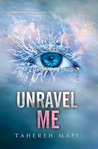
Book Review: UNRAVEL ME by Tahereh Mafi

Unravel Me (Shatter Me, #2)
Also see my review for Shatter Me and Ignite Me


Unravel Me by Tahereh Mafi
My rating: 5 of 5 stars

If brilliant meant blinding, scorching, aching, center-of-the-sun white hot, it might begin to describe how outstanding this second book in the SHATTER ME series is. I love the real world meets X-men powers dystopian that is a true EPIC READ. My mind has been wiped clean of every thought I have ever synapsed, and now I'm numb, sitting in a room with no furniture and trying to remember what it was I just finished reading. UNRAVEL ME is the definition of MIND BLOWN. Trust me. You don't even have to Google it.

Now I'm made of a thousand thousand miles of ribbon that has been unwound over all these frayed edge pages (which I love, by the way), and spilled onto the floor like some white bird is about to fly in here and weave it into a dress with a golden crown and some girl will trot off to a ball in it and meet the love of her life for the first time on the dance floor. This is particularly odd for me, since I'm male and not even remotely a princess...

I am astounded by how expertly Tahereh Mafi has crafted a story that is so powerful in the reading of it that I can't I can't I can't say enough to even come close to all the feelings I experienced in these pages. I adored SHATTER ME and 5/5 stars was no where close to what it should be rated. Well, let me tell you that UNRAVEL ME has raised those stakes a gasquillion times higher and farther and faster and lower than any line out of SHATTER ME ever did. Just. Wow.

I love how Tahereh Mafi goes into every dark and scary corner and puts the two characters who should never be put together in a room alone and says, "Go." She does this a thousand thousand times. I can't wait to see what happens next in book three. Also, I swear I'll crawl over a thousand pages of broken words if Tahereh also gives us an internovel story to read like DESTROY ME. Please, please. I beg of you. I'm not afraid to grovel. I'll do your dishes for all time.

The love triangle at the center of it all has already gone through the ringer in SHATTER ME, and intensified in DESTROY ME, but that didn't stop Tahereh Mafi from raising the bar and holding nothing, and I mean not-a-carefully-crafted-drop-of-sweat-roiling-down-your-back hold back is what you'll find in these amaZING pages I couldn't stop (breathing) turning.

Juliette is the perfect contrast of strength and kickass power at her fingertips, earthquakes in her wake, and naïve humility that swears she's not worthy of either boy's attention. Yet, she still has Adam, head over heels, devoted to her and while he tries to stay away, he's drawn to her over and over again.

When Warner shows up, he's equally attracted to Juliette's Venus Flytrap wiles and the words at the core of every word she poured out in the pages of her journal. I loved the unique approach Tahereh Mafi uses in writing in a journal style with cross outs and a kind of stream of consciousness mixed with poetry that pours out as powerfully as James Joyce did with Portrait of the Artist as a Young Man. I especially enjoyed how grammar became a focal point for Juliette in expressing the way words became her tool for survival and anchored her to language while she struggled through isolation and imprisonment.

Not all of my questions were answered, chief of which is the mysterious bird that I hope finds wings in book 3. Regardless, I'm on board to discover where the next pages take me. This is by far one of the best series I've ever read. What an amazing read.

If you haven't read this book, or SHATTER ME and DESTROY ME, then what is wrong with you? DO IT!!

View all my reviews